Hawa Mahal — The Breathtaking “Palace of Winds” in Jaipur
🌸 The Legacy of Royalty
The Hawa Mahal was commissioned in 1799 by Maharaja Sawai Pratap Singh, a ruler deeply devoted to Lord Krishna. Inspired by the shape of Krishna’s crown, the palace was designed by the brilliant architect Lal Chand Ustad as an extension of the City Palace of Jaipur.
The purpose behind its unique design was both practical and poetic. The royal ladies of the palace, bound by the customs of “purdah,” could observe the lively city processions and bazaars through the delicate jharokhas (small windows) without being seen by the public. Thus, the Hawa Mahal became a royal screen to the outside world — offering freedom within tradition.
🕌 Architectural Brilliance
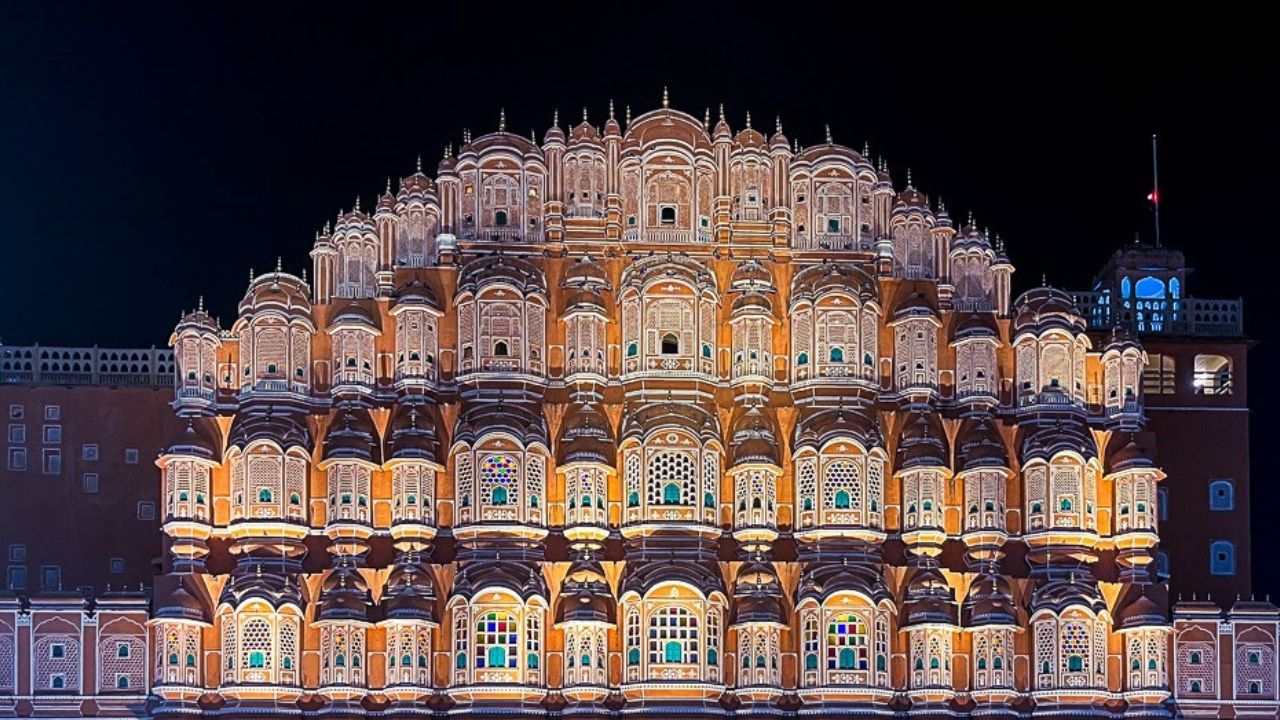
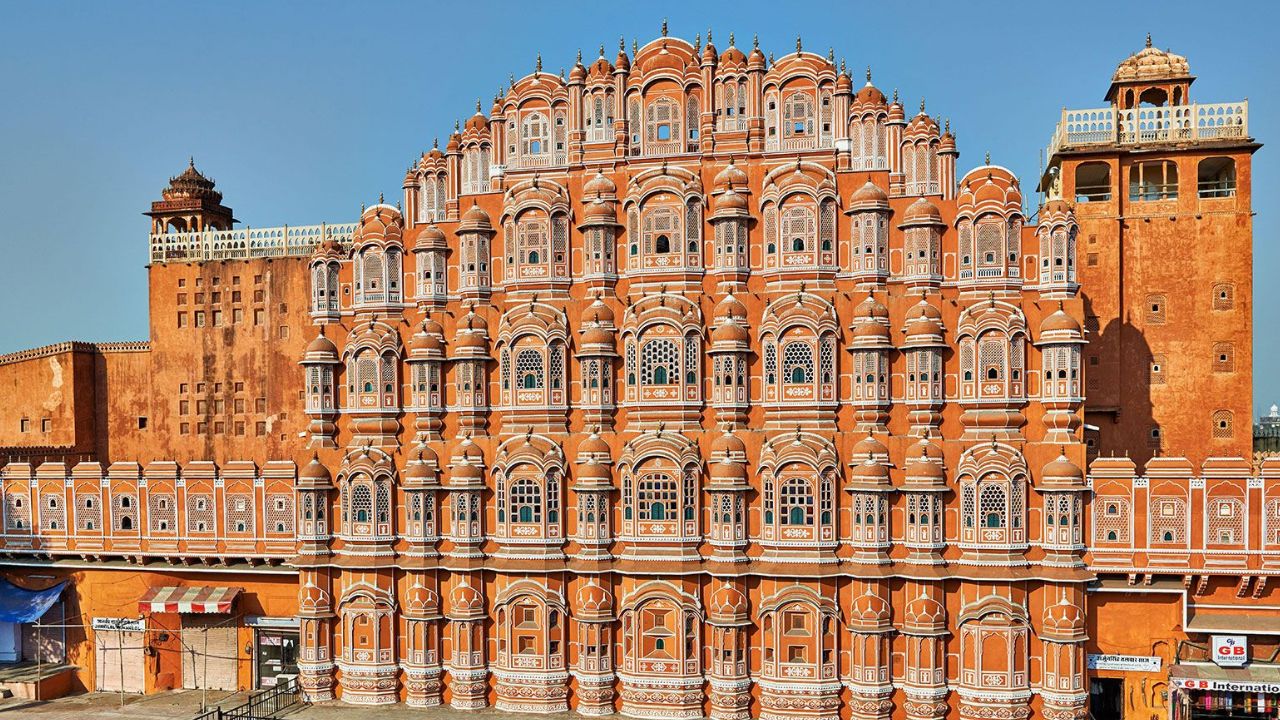
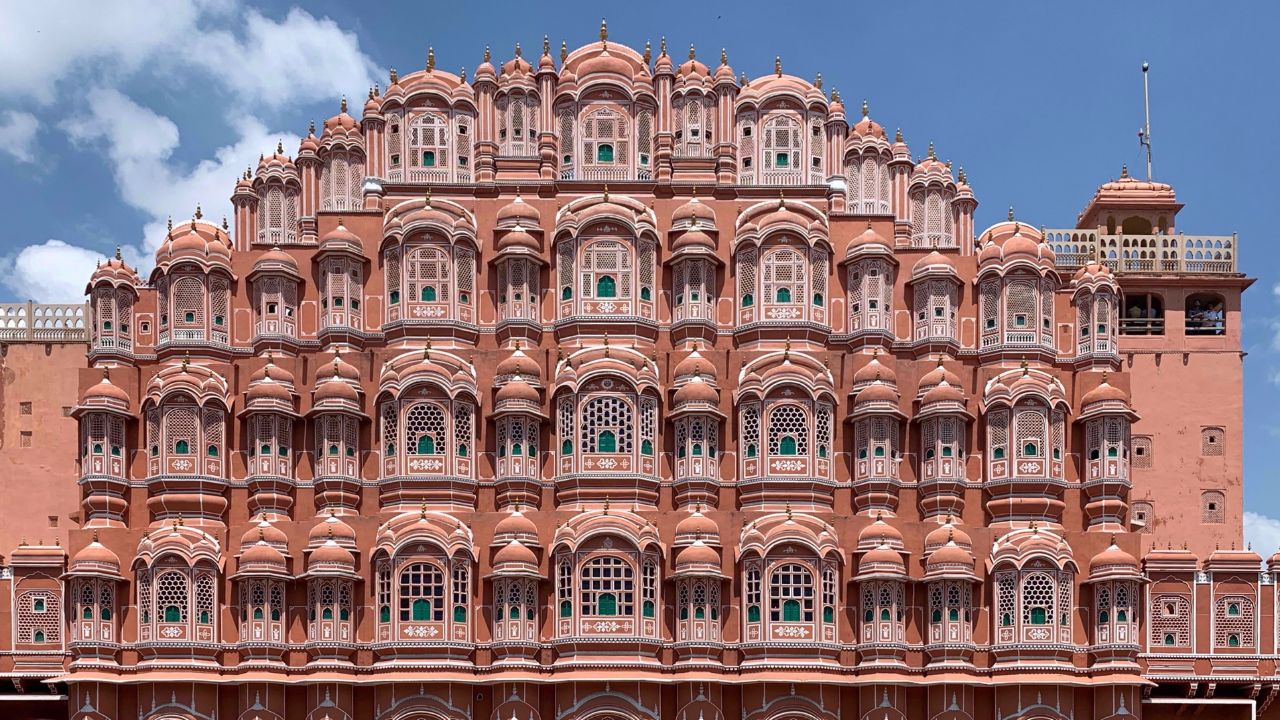
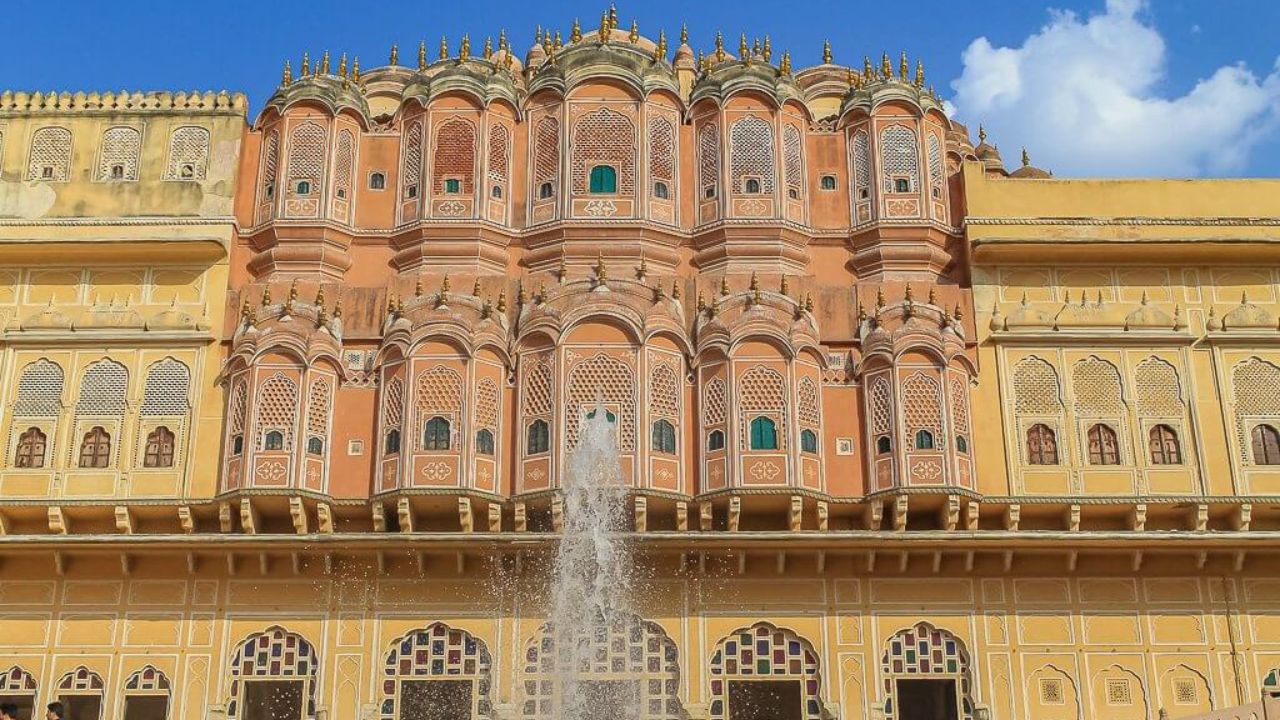
Built from red and pink sandstone, the five-storied Hawa Mahal rises gracefully like a honeycomb, adorned with 953 small windows known as “jharokhas.” These lattice-patterned windows allow the cool breeze — the “hawa” — to circulate through the palace, keeping it naturally ventilated even during the scorching summers of Rajasthan.
The façade resembles the folds of a delicate veil, with semi-octagonal towers, floral motifs, and intricate stone carvings that reflect the essence of Rajput and Mughal artistry. When sunlight falls on the sandstone walls, the palace glows with a golden hue, creating a mesmerizing sight that captures the heart of every onlooker.
🌆 The View from Above
The upper floors of the Hawa Mahal offer breathtaking panoramic views of Jaipur’s City Palace, the bustling Sireh Deori Bazaar, and the majestic Jantar Mantar observatory nearby. The narrow corridors and sloped ramps within the palace lead visitors to open terraces from where the Pink City unfolds like a royal tapestry.
Each level of the palace has its own charm — the Vichitra Mandir, Prakash Mandir, and Hawa Mandir stand as testaments to the artistic imagination of the 18th century.
💨 The Science Behind the Beauty
Beyond its visual grandeur, the Hawa Mahal is also a marvel of environmental design. Its unique honeycomb structure ensures that cool air flows through the jharokhas continuously, acting as a natural air conditioner. Even in Jaipur’s intense heat, the palace remains pleasantly cool — a perfect example of how ancient architecture harmonized with nature.
🛣 How to Reach Hawa Mahal
By Air: The nearest airport is Jaipur International Airport, about 13 km away.
By Rail: Jaipur Junction connects the city with major parts of India.
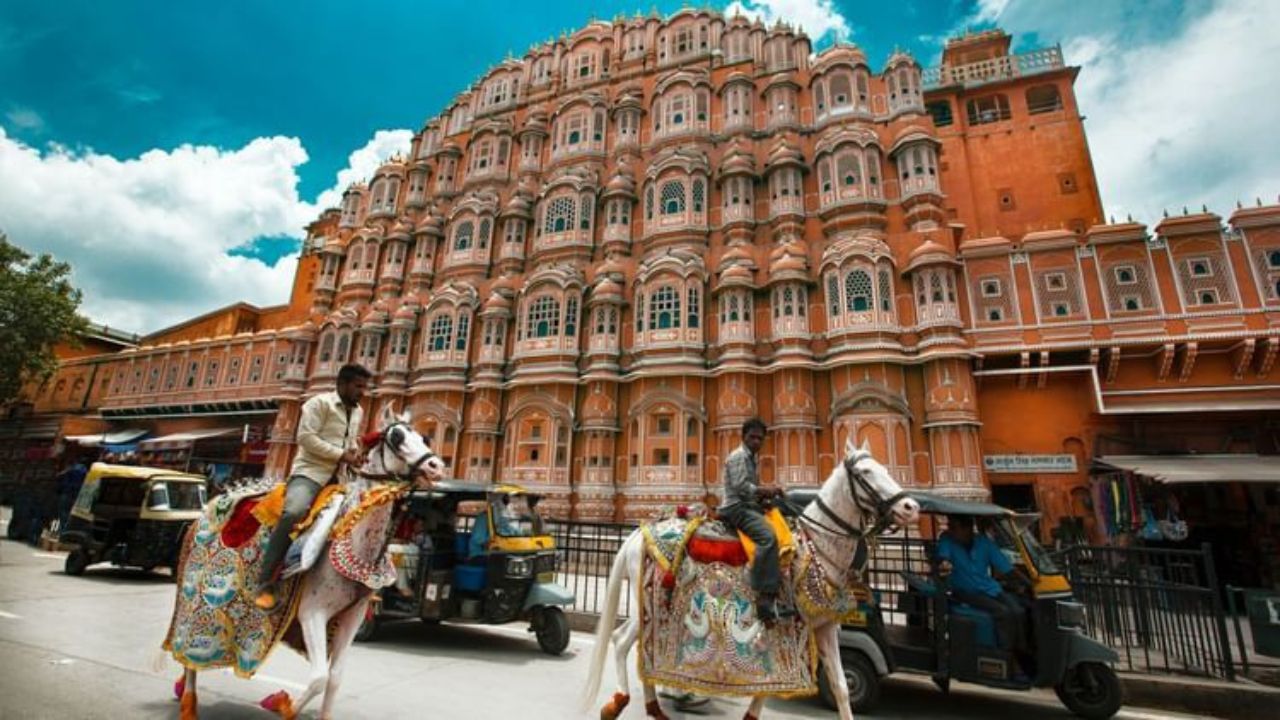
By Road: Located on Badi Chaupar in the heart of Jaipur, Hawa Mahal is easily accessible by car, auto, or even a leisurely walk from nearby markets.
🎨 The Essence of Jaipur’s Soul
Hawa Mahal is not just a monument — it is the heartbeat of Jaipur. The delicate carvings, fluttering breezes, and timeless elegance of its façade encapsulate the very spirit of Rajasthan’s royal artistry.
Standing before this pink sandstone wonder, one can almost hear the whispers of queens and the music of the desert wind — a reminder that true beauty lies in the harmony of grace, purpose, and tradition. 🌺