The Timeless Majesty of Qutub Minar — Delhi’s Towering Legacy
A Glimpse Into History
Rising proudly from the heart of Mehrauli, Delhi, the Qutub Minar stands as an enduring emblem of India’s rich historical tapestry. Built in 1193 by Qutb-ud-din Aibak, the founder of the Delhi Sultanate, this colossal minaret was not only a symbol of victory but also a statement of architectural grandeur that marked the beginning of Muslim rule in India.
Over the centuries, its construction was continued by his successors — Iltutmish and Firoz Shah Tughlaq — each contributing distinct layers of art and design, turning the tower into a magnificent chronicle of evolving craftsmanship.
Architectural Grandeur
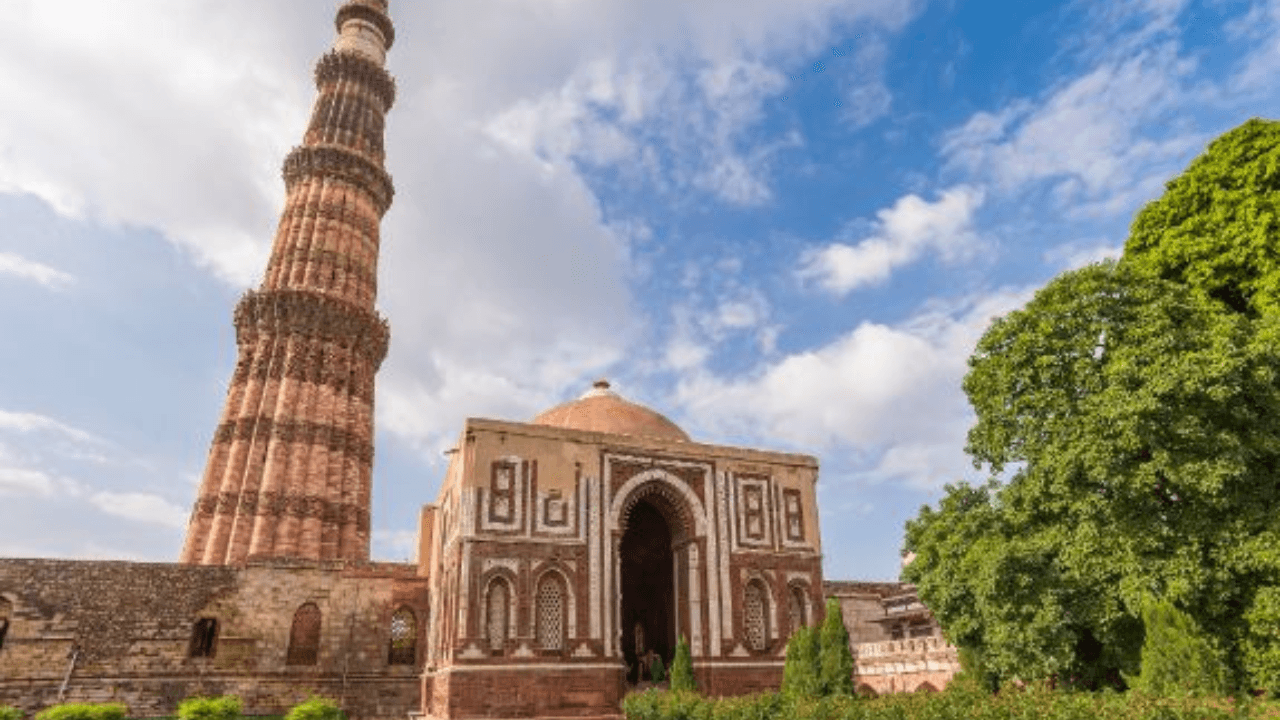
Standing at a staggering 73 meters, Qutub Minar remains the tallest brick minaret in the world. Its five tapering stories are adorned with intricate carvings and verses from the Quran, reflecting Indo-Islamic artistry at its finest. The first three stories are built from red sandstone, while the upper two showcase a blend of marble and sandstone, highlighting the seamless harmony of color and texture.
Each balcony, supported by stone brackets, features ornate geometric patterns and floral motifs that whisper stories of an era where art met faith.
The Complex Beyond the Tower
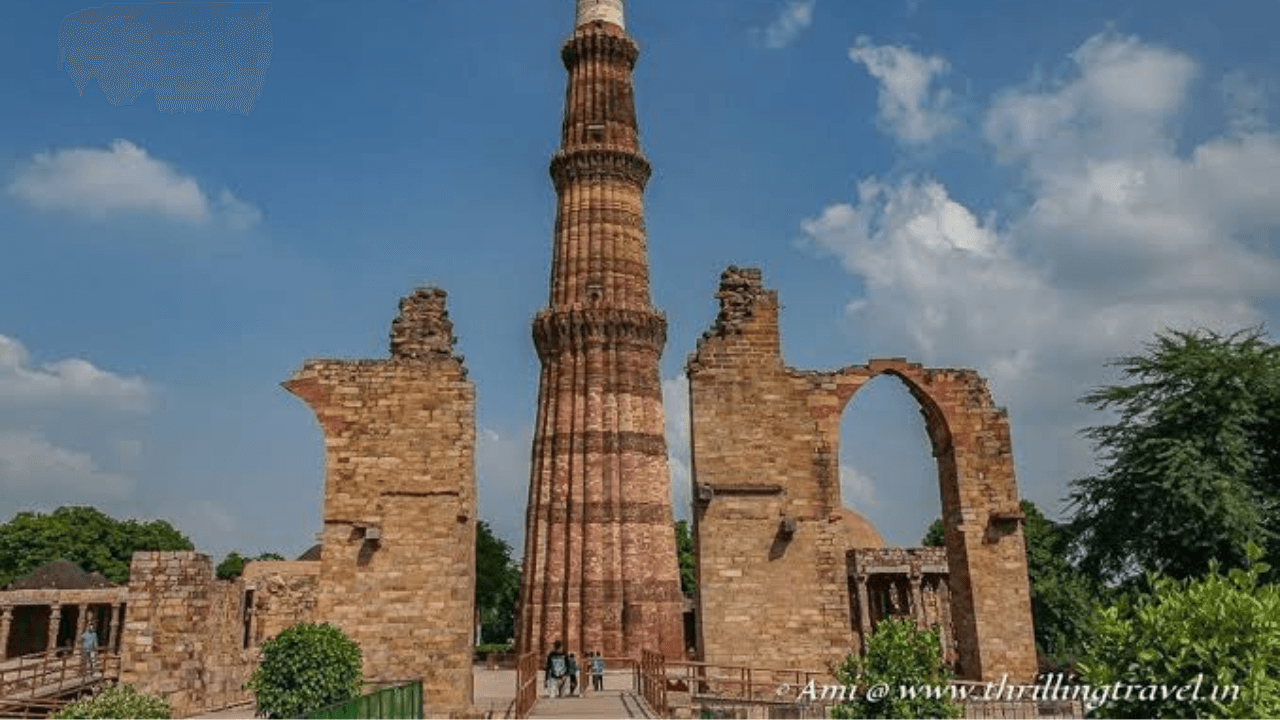
Surrounding the Qutub Minar lies the Qutub Complex, a UNESCO World Heritage Site that houses several other historical marvels. The Quwwat-ul-Islam Mosque, India’s first mosque, sits at its base, while the enigmatic Iron Pillar, dating back to the 4th century, stands nearby — rust-resistant and still a subject of scientific curiosity.
Other attractions like Alai Darwaza, Alai Minar, and the tombs of revered Sufi saints make this site a living museum of Delhi’s layered past.
Echoes of Time
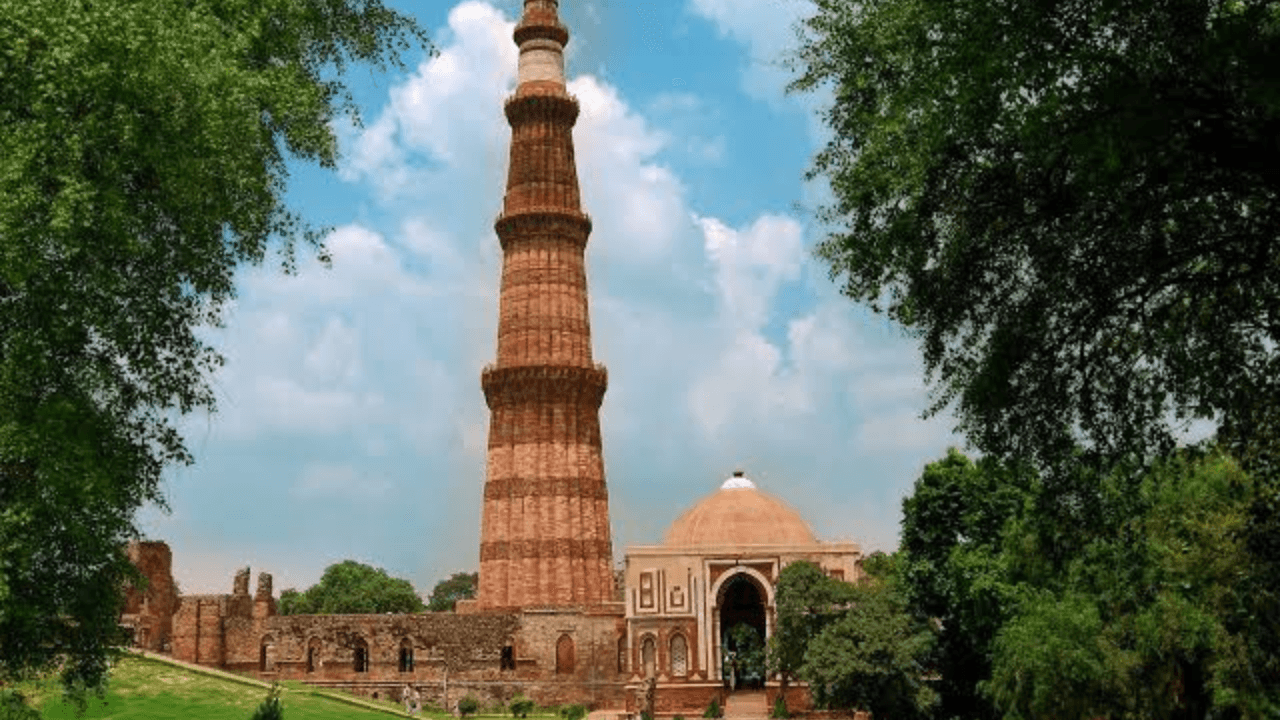
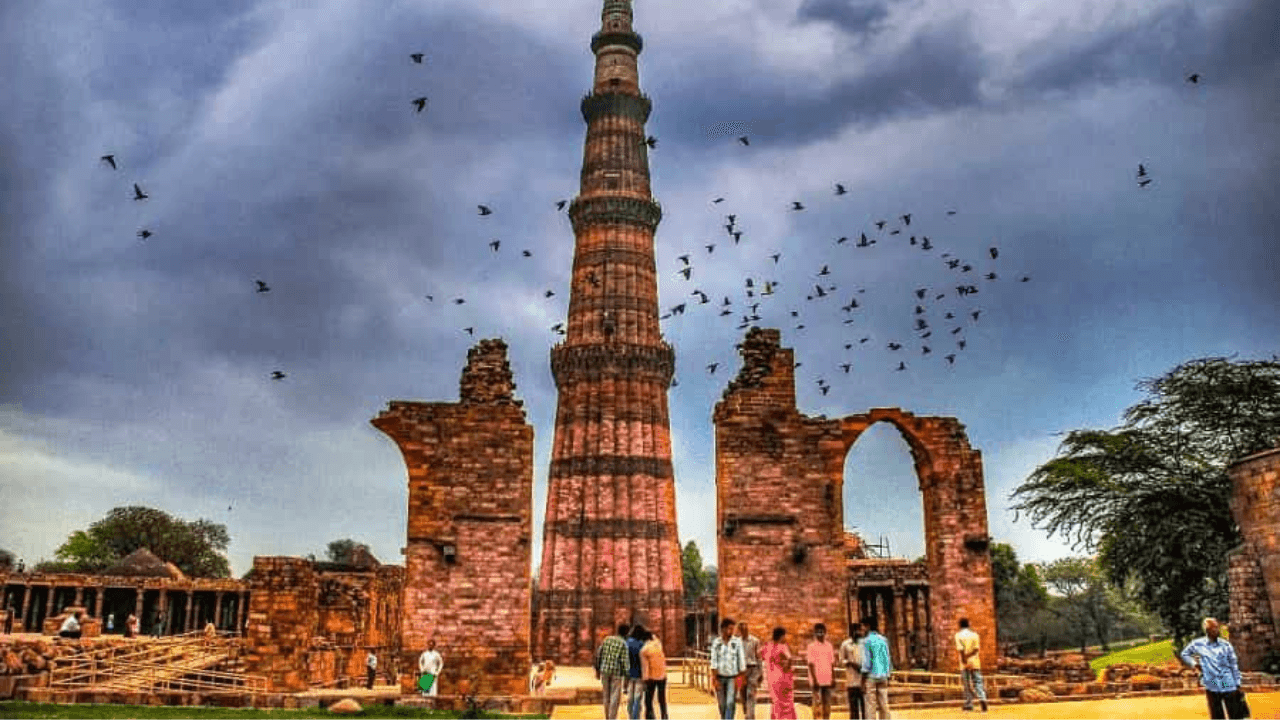
From dawn to dusk, Qutub Minar glows under changing shades of sunlight — a silent witness to empires rising and falling, traditions evolving, and civilizations blending. Even today, as birds circle its crown and tourists marvel at its scale, the minaret remains not just a relic, but a reminder of India’s dynamic historical journey.
Qutub Minar doesn’t just belong to Delhi; it belongs to every chapter of India’s heritage.