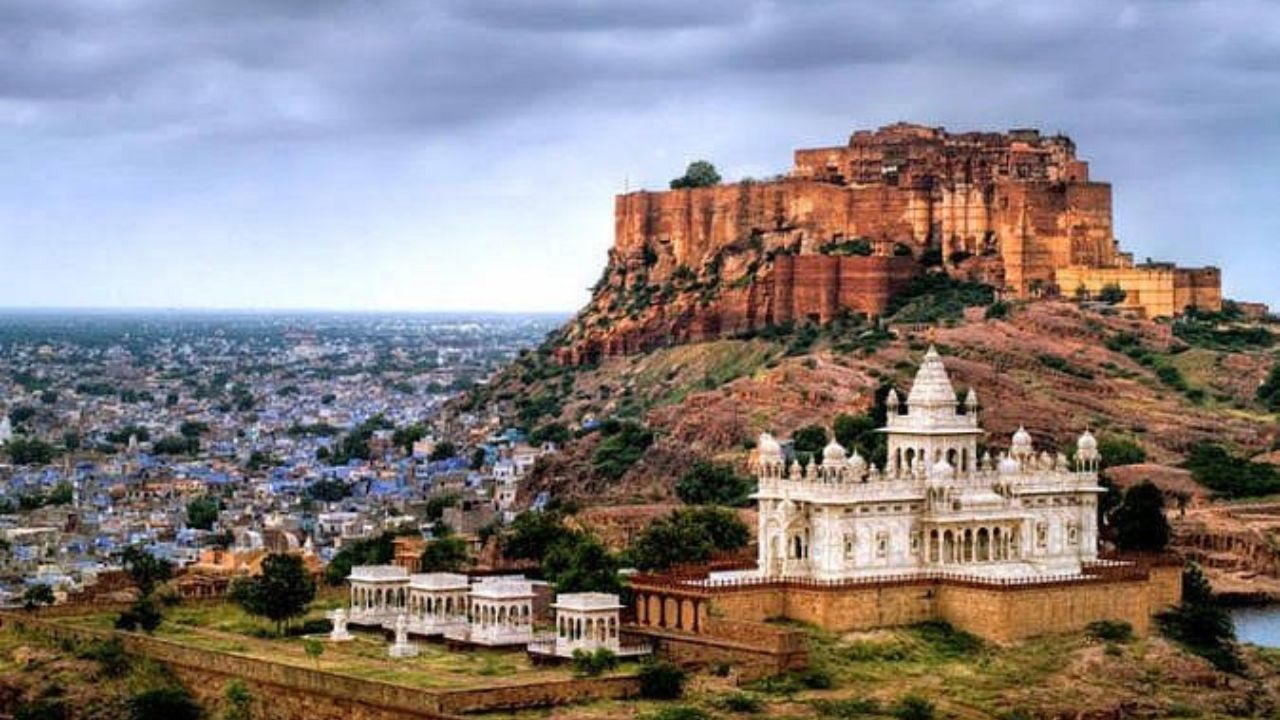
“Mehrangarh Fort – The Timeless Majesty of Jodhpur’s Blue Crown”
🌅 A Fortress Born from a King’s Dream
The story begins in 1459 AD, when Rao Jodha, the fifteenth ruler of the Rathore dynasty, decided to shift his capital from Mandore to a safer, more strategic location. Legend says a hermit, Cheeria Nathji, lived atop this rocky hill, and when Rao Jodha displaced him, the saint cursed the fort, saying that it would forever suffer from water scarcity. To counter this curse, a man named Raja Ram Meghwal volunteered to be buried alive in the foundations as a human sacrifice to ensure the fort’s prosperity. Even today, a small shrine honors his memory near the main gate — a silent reminder of the fort’s mystical beginnings.
🛕 The Gates That Guard History
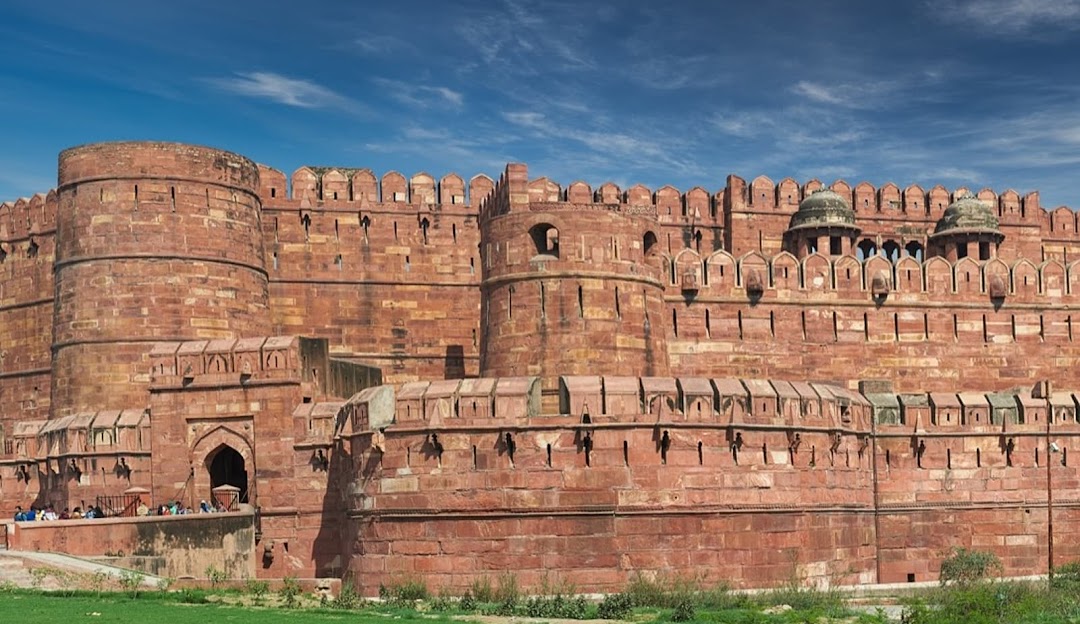
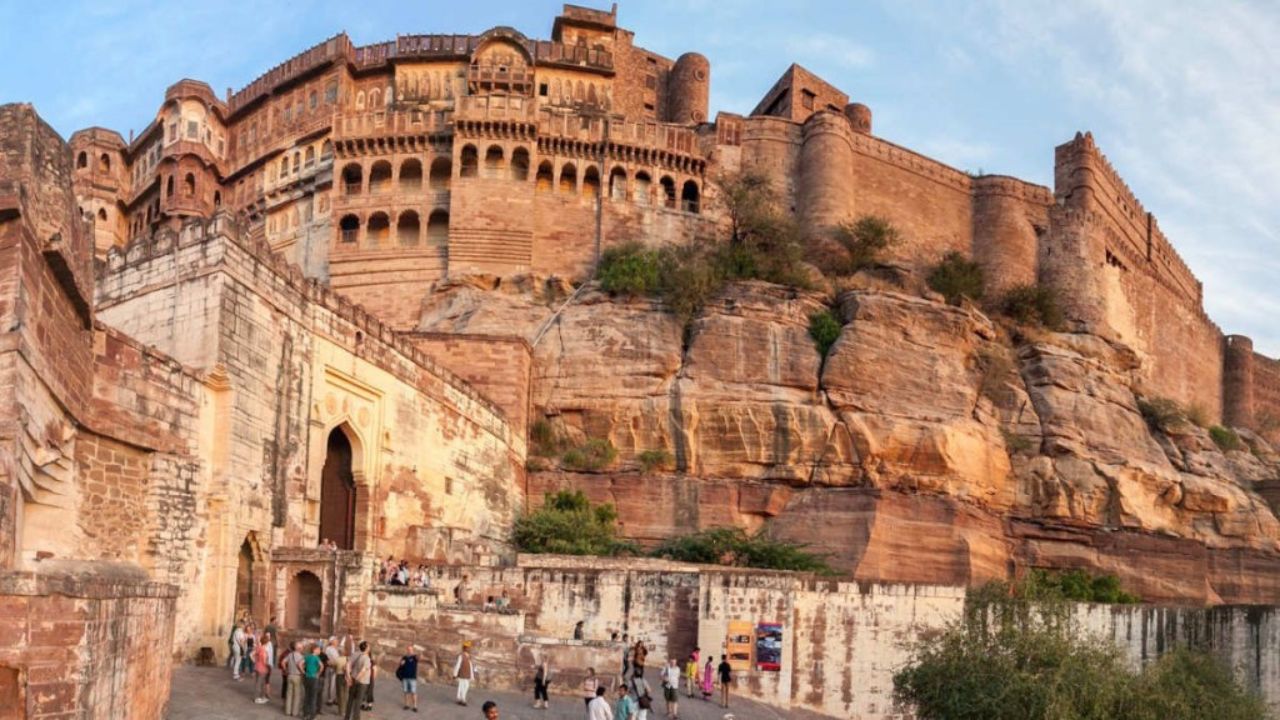
Mehrangarh has seven massive gates, each built by different rulers to commemorate victories in battle.
Jai Pol (Gate of Victory) was built by Maharaja Man Singh in 1806 after defeating Jaipur and Bikaner armies.
Loha Pol, the final gate before entering the main complex, carries a heartbreaking story — the handprints of royal widows who committed sati after their husband, Maharaja Man Singh’s death, still adorn its walls.
Every gate tells a story — not merely of stone, but of sacrifice, pride, and the unbroken line of Rajput honor.
🏛️ The Palaces of Glory
Stepping through the gates feels like entering a forgotten world. The inner complex houses a breathtaking collection of palaces that redefine royal luxury.
Moti Mahal (Pearl Palace): Once the royal audience hall, its walls shimmer with mirror work and intricate frescoes. Colored glass windows filter the sunlight into a kaleidoscope of patterns, making the hall glow like a pearl indeed.
Phool Mahal (Flower Palace): The most ornate of all, it served as the private chamber for royal entertainment. The gilded ceiling, painted with delicate floral motifs, seems to hum with the echoes of sitar music and ghungroos from long-forgotten evenings.
Sheesh Mahal (Mirror Palace): True to its name, it’s a chamber of shimmering reflections where even a single lamp lights up the entire room.
Every wall, every ceiling tells a story — of queens who watched from jharokhas, of kings who ruled with pride, and of artists who left behind their soul in colors and carvings.
🎨 A Living Museum of Royal Heritage
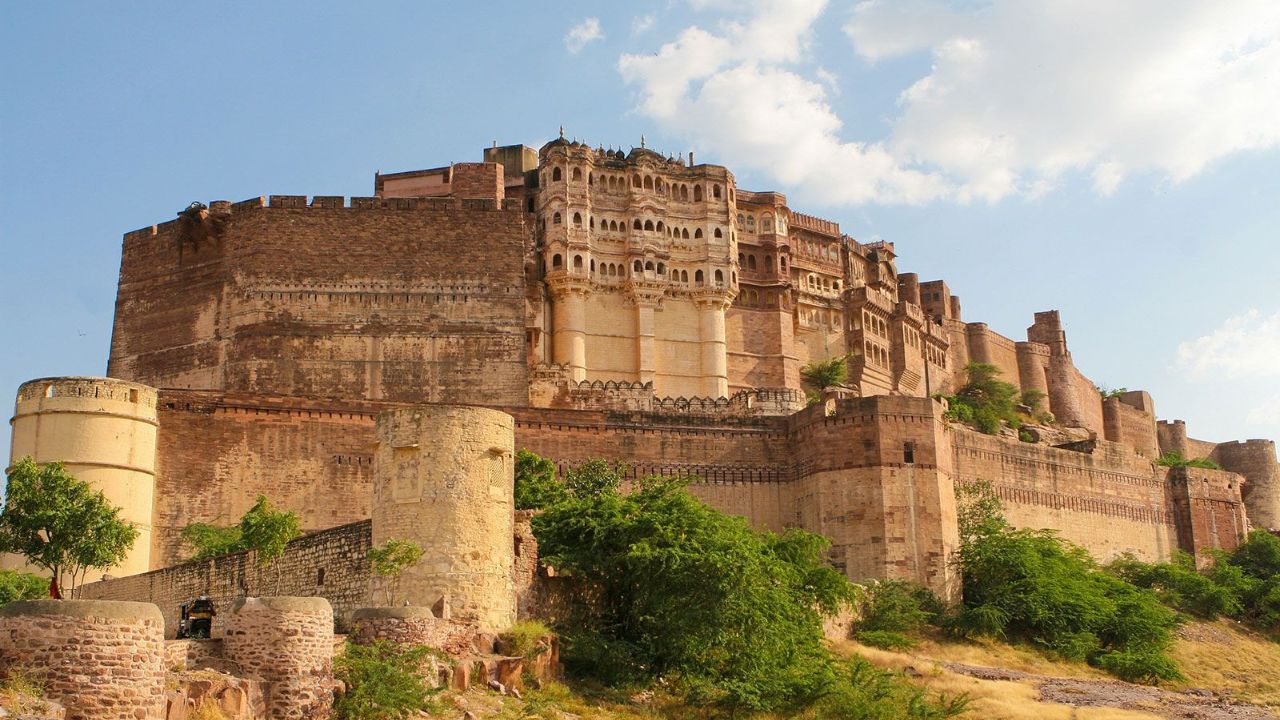
Mehrangarh Fort today houses one of India’s most well-preserved museums. Its galleries display ancient weapons, royal costumes, elephant howdahs, palanquins, miniature paintings, and musical instruments that once filled the palace corridors with life. One of the most fascinating exhibits is the silver howdah gifted by Mughal Emperor Shah Jahan to Maharaja Jaswant Singh — a symbol of respect between two great empires.
The museum is curated with such care that visitors can feel the transition of centuries — from medieval battlefields to the sophisticated courts of the Marwar kings.
🌍 The Blue City Beneath
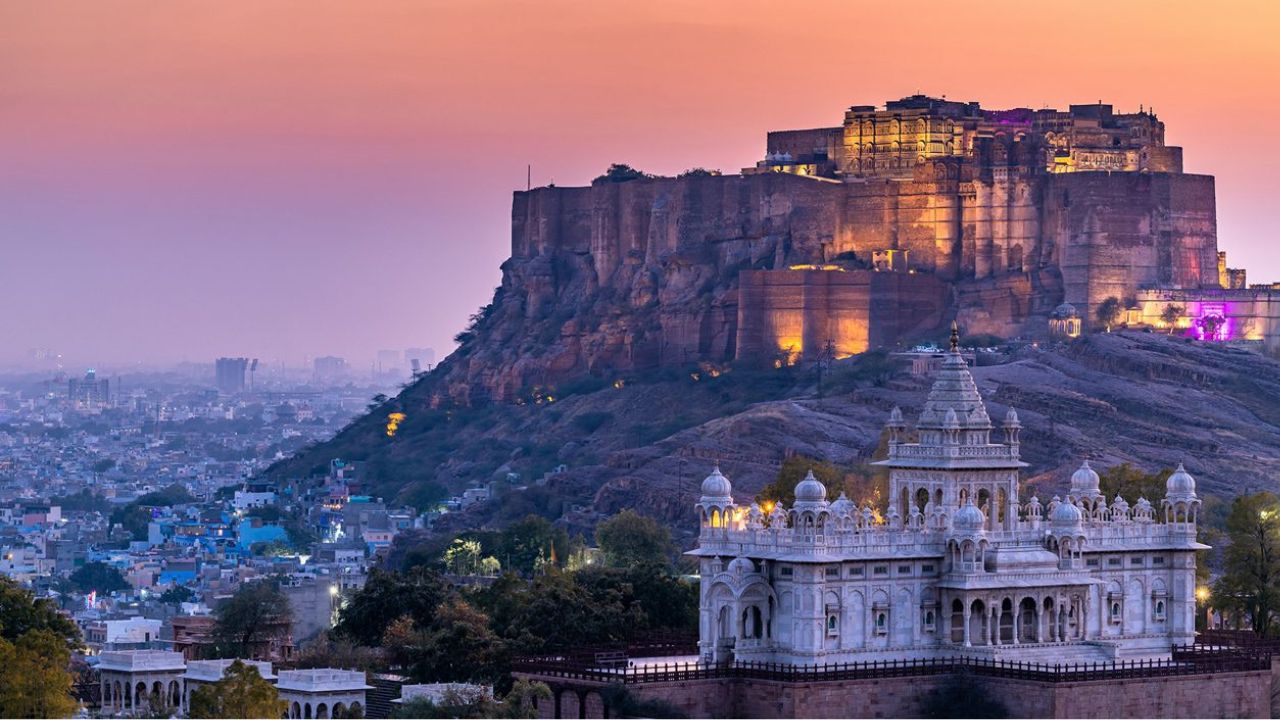
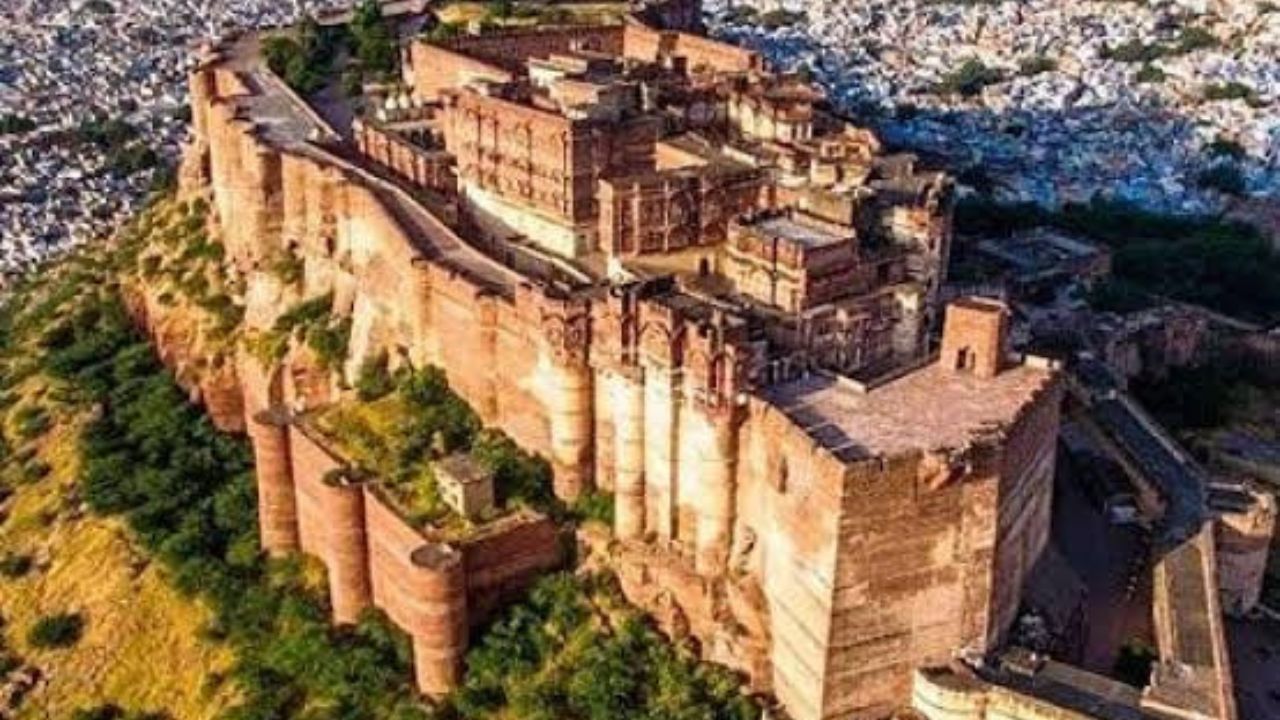
Step onto the ramparts, and you’ll see a mesmerizing view: a sea of blue houses stretching across the desert plain. Originally, Brahmins painted their homes blue to denote their caste, but over time, the entire city adopted the hue. Now, Jodhpur’s “Blue City” glows like a sapphire beneath the fort, especially when the sun begins to set. The contrast between the ochre fort and the cobalt town is a photographer’s paradise — a vision that feels almost unreal.
🎶 The Soul of Rajasthan
Beyond its architecture, Mehrangarh breathes culture. The fort hosts the world-famous Rajasthan International Folk Festival (RIFF) every October, where musicians from around the globe gather under starlit skies to celebrate traditional desert melodies. Sitting in the fort’s courtyard, with the air filled with music and the scent of desert winds, one feels history merging with the present — timeless, unbroken.
🧭 Practical Travel Guide
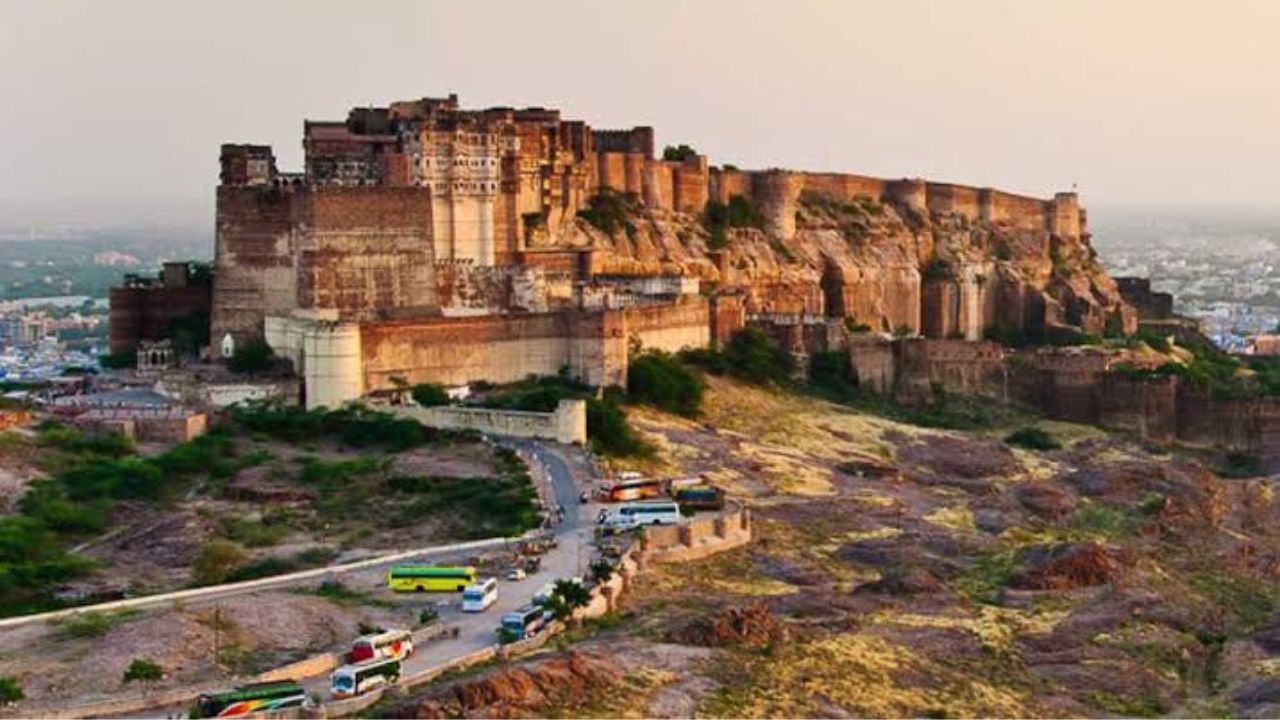
Location: 6 km from Jodhpur city center
Timings: 9:00 AM – 5:00 PM
Entry Fee: ₹200 (Indians), ₹600 (foreigners), Audio guide available
Best Time to Visit: October – March (pleasant weather)
Getting There: Autos and cabs easily available from Clock Tower or Jodhpur Junction
Nearby Attractions: Jaswant Thada (a marble cenotaph), Umaid Bhawan Palace, Toorji Ka Jhalra Stepwell
🧡 My Reflection
Walking through Mehrangarh Fort isn’t just exploring architecture — it’s entering a living story. You can hear the clang of swords, the laughter in royal halls, and the whispers of devotion in every courtyard. The fort doesn’t just tell the history of Jodhpur — it is Jodhpur.
And as the sun sets behind its mighty ramparts, the fort turns golden — as if the desert itself bows to its king.